React Server Components: Building Faster Next.js Applications
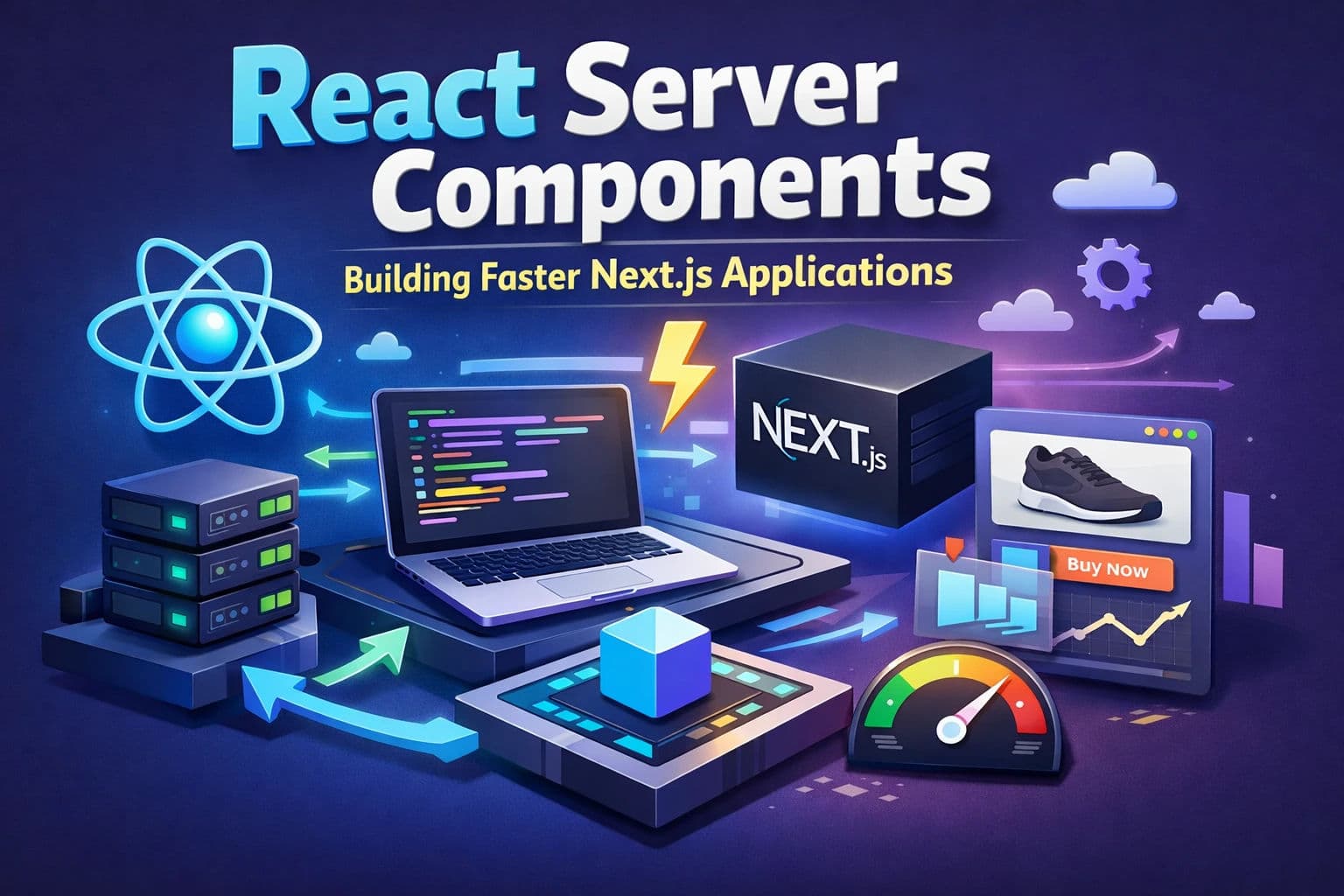
React Server Components (RSCs) represent a paradigm shift in how we build modern web applications. As a full-stack developer, I, Clark Heal Carreon, have found them invaluable in creating faster, more efficient, and more secure user experiences. By allowing components to run exclusively on the server, React Server Components eliminate large JavaScript bundles from being sent to the client. In this post, I’ll explore the benefits, trade-offs, and practical implementation of RSCs in a modern Next.js application—drawing directly from hands-on experience.
Key Benefits of React Server Components
React Server Components offer several powerful advantages that directly impact both performance and developer experience:
- Zero Client-Side JavaScript: Server Components execute on the server at build time or request time, meaning their code is never shipped to the browser. This dramatically reduces client-side bundle size, resulting in faster initial page loads—especially on slower networks or lower-powered devices.
- Direct Backend Access: Because RSCs run on the server, they can directly access databases, file systems, or internal APIs without the need to create separate API routes. This simplifies data-fetching logic and reduces boilerplate code.
- Automatic Code Splitting: Every Server Component import acts as a natural code-split point. Only the components required for the current view are sent to the client, preventing unrelated code from bloating the bundle.
- Enhanced Security: Sensitive logic and credentials—such as API keys or database access—remain entirely on the server. This minimizes the risk of accidental exposure and strengthens application security.
Practical Implementation: A Step-by-Step Guide
In Next.js (App Router), all components are Server Components by default. You only opt in to Client Components when interactivity is required.
Step 1: Create a Default Server Component
Let’s start with a Server Component that fetches and displays a list of blog posts. This is an ideal use case since it’s non-interactive and data-driven.
async function getPosts() {
  const res = await fetch('https://api.example.com/posts');
  if (!res.ok) {
    throw new Error('Failed to fetch posts');
  }
  return res.json();
}

export default async function PostListPage() {
  const posts = await getPosts();
  return (
    <div>
      <h1>Blog Posts</h1>
      <ul>
        {posts.map((post: any) => (
          <li key={post.id}>{post.title}</li>
        ))}
      </ul>
    </div>
  );
}
Step 2: Add Interactivity with a Client Component
Now, let’s say we want to add a “Like” button to each post. Since this requires user interaction and state management, it must be a Client Component. To create one, simply add the `'use client'` directive at the top of the file.
'use client';

import { useState } from 'react';

export function LikeButton() {
  const [likes, setLikes] = useState(0);

  return (
    <button onClick={() => setLikes(likes + 1)}>
      ❤️ {likes}
    </button>
  );
}
Step 3: Combine Server and Client Components
The real power of RSCs comes from combining Server and Client Components seamlessly. You can import a Client Component directly into a Server Component.
import { LikeButton } from '@/components/LikeButton';

async function getPosts() {
  // ...data fetching logic
}

export default async function PostListPage() {
  const posts = await getPosts();

  return (
    <div>
      <h1>Blog Posts</h1>
      <ul>
        {posts.map((post: any) => (
          <li
            key={post.id}
            className="flex justify-between items-center"
          >
            <span>{post.title}</span>
            <LikeButton />
          </li>
        ))}
      </ul>
    </div>
  );
}
This pattern allows you to keep most of your application as fast, server-rendered HTML while adding small islands of interactivity exactly where they’re needed.
Conclusion
By embracing React Server Components, I, Clark Heal Carreon, have been able to build applications that are faster, more efficient, and more secure. RSCs provide the best of both worlds: the performance advantages of server-side rendering and the flexibility of client-side interactivity.
As you continue your journey with Next.js, mastering the balance between Server Components and Client Components will be key to unlocking a new level of web performance.